
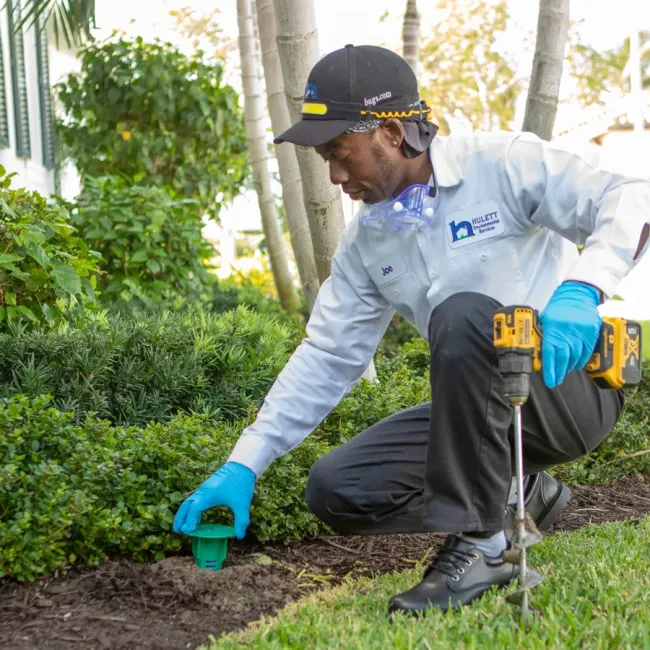
Termite Control in Sebastian, FL
Termites are patient, and recurring activity is easy to miss until the damage adds up. Getting ahead of the problem takes more than a one-time treatment — it takes a thorough property inspection, the right strategy for your specific situation, and consistent follow-through.
Without a plan built around your home's entry points and seasonal termite behavior, the same vulnerabilities keep inviting problems back. Hulett Environmental Services uses targeted prevention strategies and structured recurring service programs to reduce ongoing activity and help keep your property protected year after year.
Termite control services offered in Sebastian:
- Termite Inspections
- Termite Treatment
- Sentricon Bait Station Monitoring
- Termite Renewal Programs

Additional Services in Sebastian
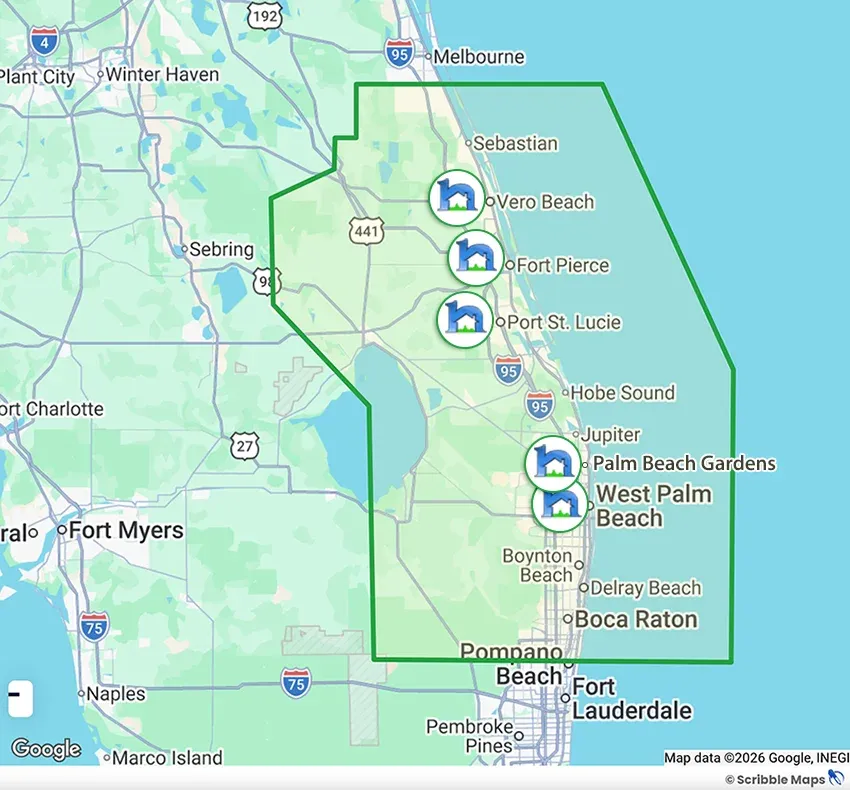
A Guarantee Worth Holding On To
When you invest in termite protection, you want to know it holds up. Hulett's free re-treatment guarantee means that if termites return between scheduled visits, a technician comes back at no charge.
No negotiating, no extra fees, no starting over from scratch. A lot of national providers treat each visit as a separate transaction. Here, the guarantee is part of the service from day one.
Warning Signs Your Home May Have a Termite Problem
Termites rarely announce themselves. By the time most homeowners notice something is off, the damage has already been building for months, sometimes years. Knowing what to look for gives you a real advantage when it comes to protecting the home you have worked so hard to maintain.
Common signs of termite activity in Florida homes include:
- Hollow-sounding wood when tapped, especially along baseboards, door frames, or structural beams
- Mud tubes running along your foundation, exterior walls, or crawl space supports
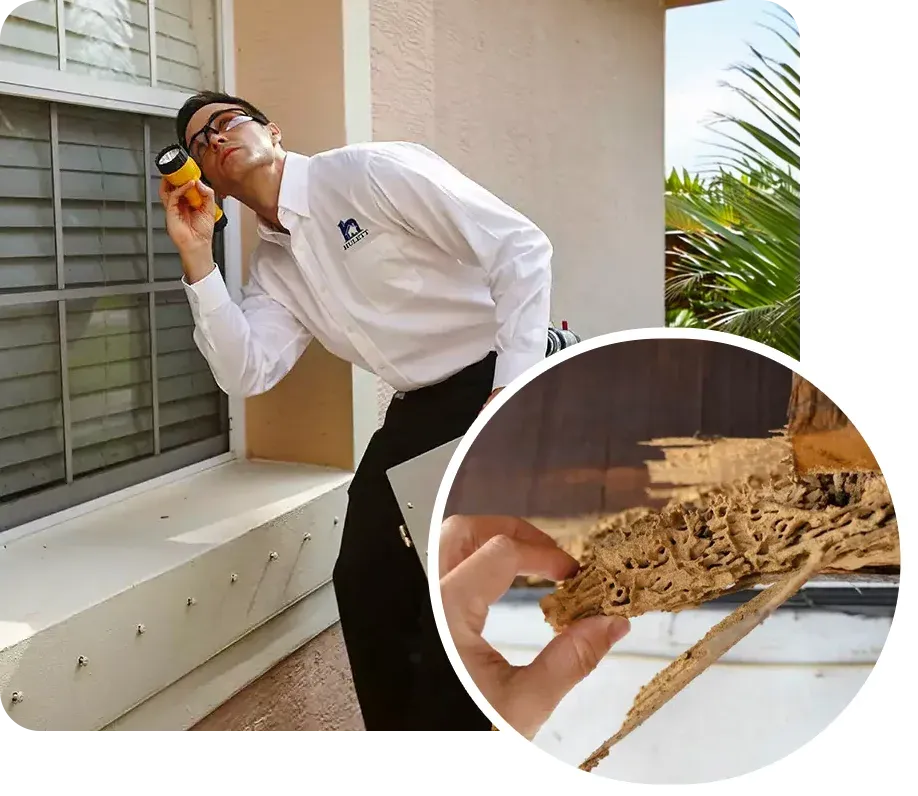
- Small piles of frass (termite droppings that resemble fine sawdust or tiny wood pellets) near windowsills, door frames, or wood trim
- Discarded wings near windows, doors, or light sources, left behind after a termite swarm
- Doors and windows that suddenly stick or feel warped without an obvious cause
- Bubbling or uneven paint on walls that looks similar to water damage but has no moisture source
- Visible wood damage with a honeycombed or layered texture along the grain
Subterranean and Formosan termites, both common in this region, are aggressive species that move through soil and can compromise structural wood before a single visible sign appears. That combination of hidden activity and rapid colony growth is exactly why a thorough property inspection matters so much. A trained eye can catch what a casual walkthrough will miss every time.
How the Sentricon System Eliminates Termite Colonies
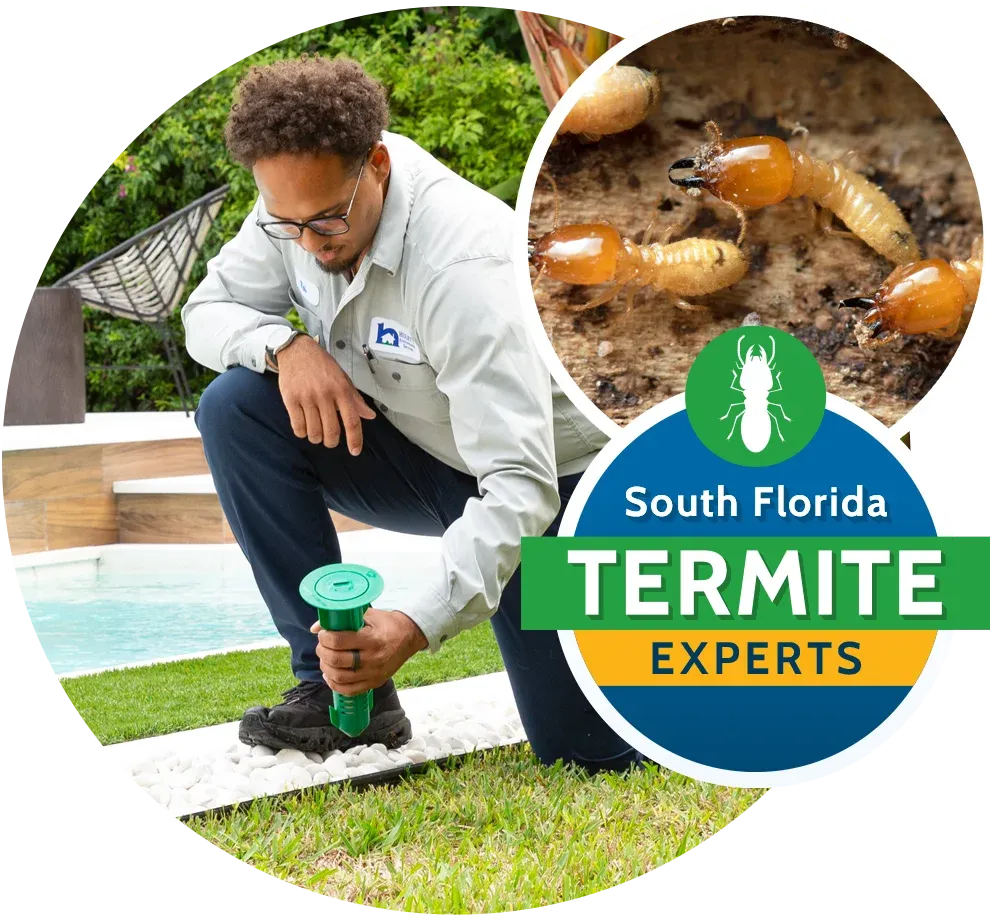
The Sentricon System works by placing bait stations in a protective ring around your property. Termites find the bait, consume it, and carry it back to the colony, including the queen. That means the entire colony is eliminated, not just the termites you can see. It works as both a termite treatment for active infestations and as an ongoing preventative measure, so your home stays protected year-round with no disruption to your lawn or landscaping.
Here is what makes Sentricon a smart choice for termite inspection and long-term protection, and why Hulett Environmental Services recommends it to homeowners who want reliable results:
- Eliminates the entire termite colony, including the queen, not just surface-level termites
- Backed by more than 60 scientific studies, making it the most thoroughly researched termite control product available
- Minimally disruptive installation with no digging, drilling, or damage to your yard
- Continuous monitoring built in, so you always have visible evidence of protection
- Earned the EPA's Presidential Green Chemistry Challenge Award for its environmentally responsible approach
- No restrictions around water sources or wells, making it safe for a wide range of property types
- Effective from day one, with no degradation in performance over time
If you have concerns about termites or just want to know where things stand, our team is ready to help. A certified exterminator from Hulett can walk you through your options, answer your questions directly, and schedule a termite inspection at a time that works for you. Just give us a call and a real person will pick up.
Hulett Termite Control
What Attracts Termites to a House?
Frequently Asked Questions
Could there be termites on my property right now?
Yes. Termites forage continuously for new food sources. A standard residential lot in South Florida can support three to four active subterranean termite colonies simultaneously, each potentially containing up to a million individual termites. Because termites often feed inside wood without visible surface signs, an infestation can be well established before it is detected. Routine inspections are the most reliable way to catch activity early.
Do I need to have my home inspected regularly for termites?
Yes, regular inspections are crucial, especially if you live in an area with a high risk of termite activity. Annual inspections can help identify potential problems early and prevent extensive damage. Termite problems are often hidden from view, so professional inspections are the best way to spot an issue before it becomes severe.
Does Hulett offer a termite warranty?
Customers on a Hulett termite plan receive free re-treatments if termites return between services. Termite damage is not covered by standard homeowner's insurance, which makes ongoing preventive treatment an important consideration for South Florida homeowners. Contact Hulett for details on current plan terms.
How long does it take termites to cause damage?
Termites can begin to cause significant damage surprisingly quickly. The exact timeframe depends on factors like the size of the infestation and the type of termites, but in general:
- Subterranean termites (the most common type) can cause visible damage in as little as 3 to 6 months in a heavily infested area. These termites typically start in hidden areas and work their way into the wood of your home, eating it from the inside out.
- Drywood termites may take several years to cause noticeable damage, as they usually infest smaller areas of wood and are more difficult to detect early on.
In the early stages of an infestation, termites often cause little visible damage. The wood they eat from the inside may look normal on the outside, making it easy for homeowners to miss the signs. However, as they continue to feed, structural damage can escalate quickly, compromising the integrity of your home’s framework. It’s crucial to address any signs of termites early, as even a small infestation can lead to significant damage if left untreated. Regular inspections can help catch potential problems before they become costly.
What are the most common types of termites?
There are three primary types of termites that can infest homes and properties: Subterranean, Drywood, and Formosan termites. Each type behaves differently, has unique characteristics, and requires different approaches to control and treatment. Subterranean termites are the most destructive and widespread type of termites in the United States!
What are the pros of termite bait stations?
Termite bait stations are installed around the property perimeter and use an insect growth regulator that prevents subterranean termites from molting and developing correctly, ultimately eliminating the colony. They can be used as both a preventive measure and a curative treatment for active infestations.
Advantages of termite bait stations:
- Low environmental impact — product is contained within the station and specifically targets termites
- Termites are attracted to the bait over wood, which draws foraging termites away from the structure
- Eliminates the colony rather than creating a repellent barrier
- No intensive digging or drilling required during installation
- Works on most structure types, including those where other treatment methods are not feasible
- Compatible with other termite control methods
What happens if I don’t treat a termite infestation?
If left untreated, termites can cause significant structural damage that could lead to expensive repairs. Over time, termites can weaken beams, flooring, and even the foundation of your home. Early intervention is key to preventing costly damage.
What is a termite swarm and what does it mean?
A termite swarm occurs when an established colony releases winged reproductive termites to start new colonies. Subterranean termites typically swarm during the day; drywood termites typically swarm at night.
Swarmers are a sign of an active termite colony nearby or within the structure. If you observe a swarm, contact Hulett to schedule an inspection.
What is the difference between drywood and subterranean termites?
Drywood termites:
- Do not require ground contact or moisture
- Live entirely within wood — structural timber or furniture
- Smaller colonies than subterranean termites
- Swarm generally after sunset, May through November
- Swarmers are typically brownish
Subterranean termites:
- Require ground contact or a secondary moisture source
- Live in underground colonies and travel to wood to feed
- Swarm during the day, typically spring and summer, often after heavy rain
- Swarmers are typically small and dark
Treatment methods differ by species. A professional inspection is needed to identify which type is present.
What termite treatment options does Hulett offer?
Hulett offers treatment options for both drywood and subterranean termites.
Drywood termites:
- Structural fumigation (tenting): The entire structure is enclosed and treated with fumigant gas. Residents and pets must vacate for several days. Used for widespread or difficult-to-access infestations.
- No-tent treatment: A non-repellent liquid, foam, or dust is injected directly into termite galleries. No need to vacate or remove plants or household items. Suitable for localized, accessible infestations.
Subterranean termites:
- Liquid Defense Treatment: A liquid termiticide is applied to the soil around the structure's perimeter, creating a treated zone. Widely used across the U.S.
- Termite baiting system: Bait stations are installed around the property perimeter. Termites locate the bait and carry it back to the colony, where it spreads through the population via an insect growth regulator.
The appropriate method depends on the termite species, the extent of the infestation, and the property's access. A termite inspection determines the best approach.
What termite treatment would Hulett recommend for my home?
Different termite species require different treatment approaches. Hulett provides options for both major types found in South Florida.
For drywood termites, options include structural fumigation (tenting) or a no-tent localized treatment. The choice depends on the extent of infestation and accessibility of affected areas.
For subterranean termites, options include a soil-applied liquid termiticide (Liquid Defense) or a perimeter baiting system. Both eliminate active colonies; the right choice depends on property conditions and customer preference.
A professional termite inspection will identify the termite species present and determine the most appropriate treatment method.
Will termites go away on their own after termite season?
No. Termites are active year-round — swarm season makes them more visible, but colonies continue feeding and growing outside of it. Subterranean termites build mud tunnels that allow them to feed inside a structure for months or years without detection. Preventive termite treatments can intercept termites before they enter a structure.

Your Solution Starts with a Free Quote
Call 1-866-479-8095 now or complete the form.
We provide expert control, treatment, and prevention for a wide range of pests, including:
Aphids
Ants (including fire ants)
Centipedes and Millipedes
Cockroaches
Fleas and Ticks
Grubs
Lawn pests
Mosquitoes
Rodents
Sod Webworms
Spiders
Termites
And More!